THE WOLF IN GERMANY
RETURN OF A SHADOW CREATUR
1/16/20263 min read
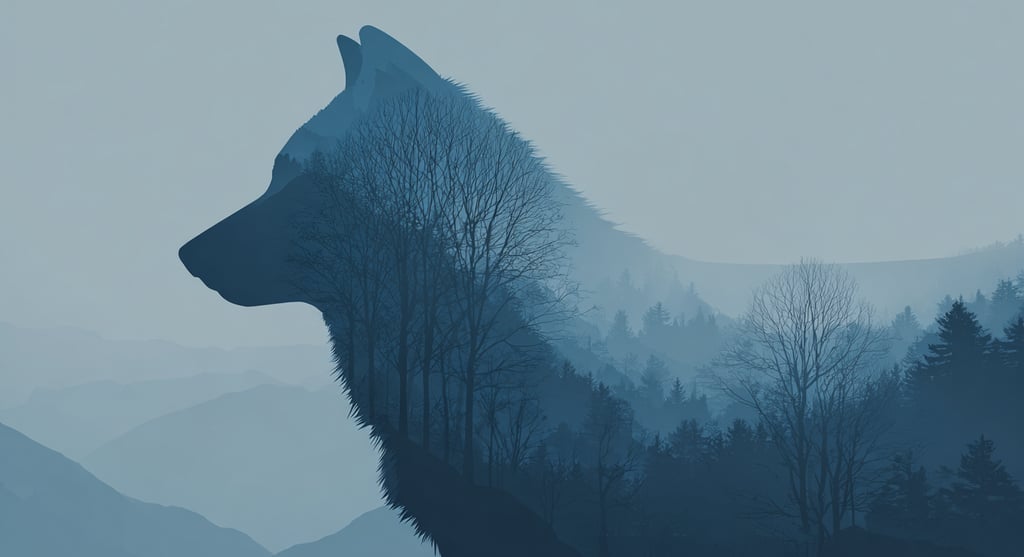
It comes quietly. Almost invisibly. A shadow in the twilight, hardly ever seen – and yet there. The wolf is back in Germany. What some see as a triumph of nature, others see as a threat. Between romantic wilderness and real challenges, a tension arises that demands more than black-and-white thinking.
A Returnee, not an Intruder
For around 25 years, wolves have been returning to Germany naturally – mainly from Poland, where they never completely disappeared. The animals migrate, seek new territories and follow their ancient instincts. And they find suitable habitats here: extensive forests, places of refuge and food. So their return is no coincidence, but the result of conservation measures, a dense prey population and the retreat of humans from many rural regions. The wolf belongs here. It was always part of our ecosystem – until humans almost completely exterminated it a good 150 years ago.
But their return does not automatically mean harmony.
Fascination and Fear – two Sides of the same Coin
The wolf is a symbol. Of freedom, wildness, nature. For many, it is a beacon of hope in times of species extinction. And at the same time, it evokes fears deeply rooted in our cultural memory.
From the ‘big bad Wolf’ to the real Animal – the Shadow from Fairy Tales
For centuries, the wolf has been not only an animal, but also a narrative figure: dangerous, greedy, devious. In fairy tales such as Little Red Riding Hood or The Wolf and the Seven Little Kids, it became the epitome of evil. These stories have been passed down through generations – and continue to shape our image of the wolf to this day. Even though we as adults know that these stories are symbolic and not realistic, many feelings remain: mistrust, fear, uncertainty. So when we talk about wolves, we also have to talk about these inner images – not to invalidate them, but to make us aware of them. Only then can information really have an effect.
Agriculture at its limits
Those who are already struggling the most are often hit the hardest: farmers, especially those with grazing animals. For them, a wolf attack can be an economic and emotional disaster. Protective measures such as fences and herd protection dogs help – but they involve effort and expense and change the way farming is done. Those who keep grazing animals do not want to see them behind fortresses. That is why support, clear rules and rapid assistance in the event of damage are needed. Blanket romanticisation does not help anyone here. Tourism and the public – between curiosity and uncertainty
The wolf also raises questions in tourism. Hikers with dogs are unsettled, and holiday regions are discussing wolf observation versus wolf avoidance. Some fear damage to their image, others see new opportunities for gentle nature tourism. Here, too, the key is information rather than speculation. Because wolves avoid humans. Sightings are rare, encounters fleeting. Those who know how wolves live and behave often lose their fear and gain respect.
The right Approach – Knowledge creates Safety
Wolves need space – but also clear boundaries. They are not cuddly toys, but wild predators. That is why a responsible approach is crucial: wolves must not be fed, and if they become too accustomed to humans, action must be taken. At the same time, however, it is also wrong to sound the alarm or even call for a hunt every time one is sighted. Management must be differentiated, objective and transparent. This applies to authorities and politicians – but also to the media.
Conclusion: between Wilderness and Reality
The wolf is more than just an animal. It is a touchstone for how we as a society treat nature. Can we learn to coexist? Can we protect without repressing – and at the same time listen to where concerns exist? The wolf challenges us. Not as a monster. Not as a fairy-tale character. But as part of a complex whole in which we humans are not just spectators, but co-creators.
And perhaps that is precisely the real opportunity in his return: to rediscover not only nature, but also our relationship with it.