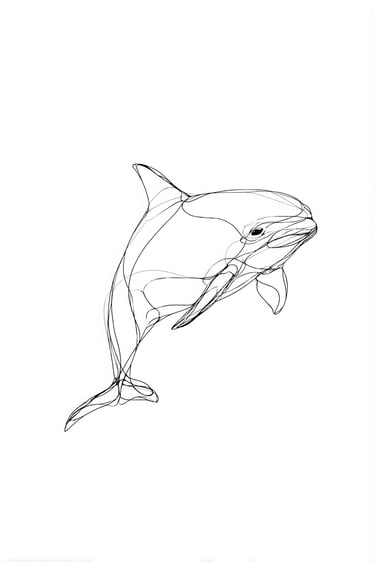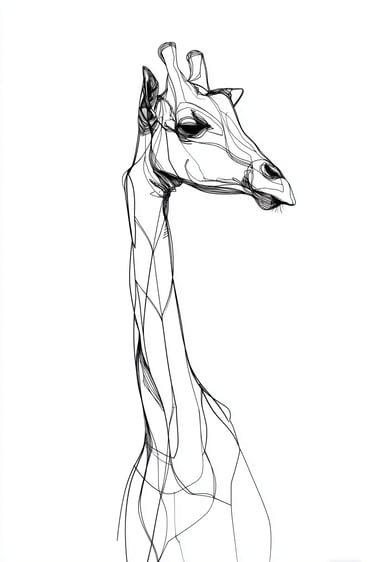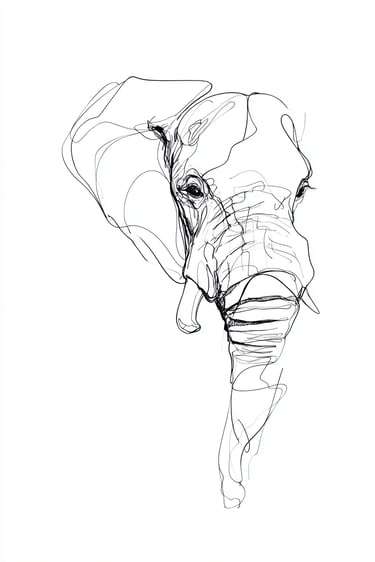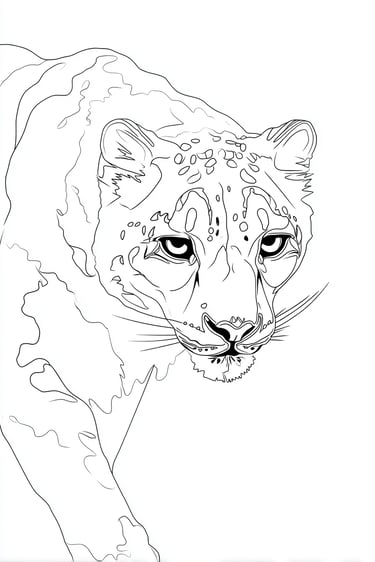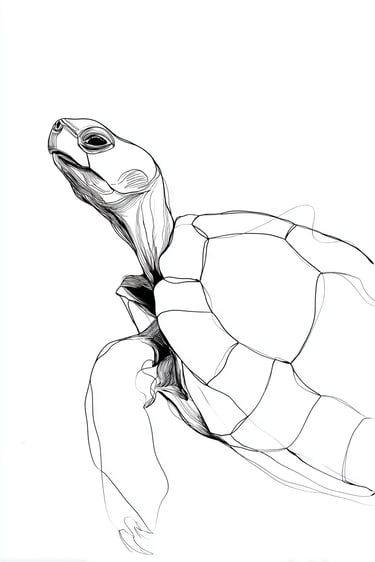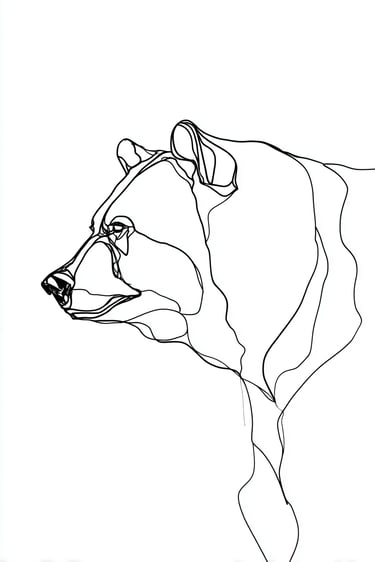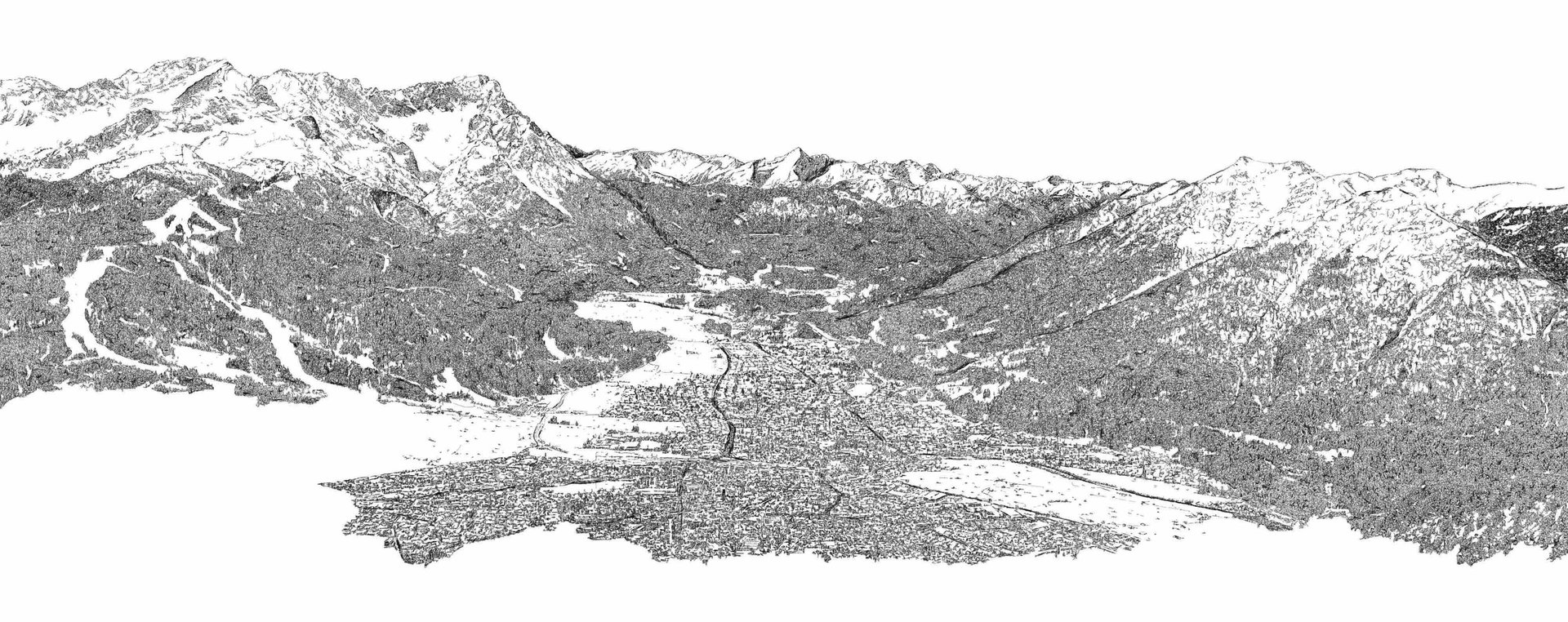
The enclosure is well maintained. The information text is correct.
And yet the question remains:
What are we actually seeing – the animal? Or our image of it?
Zoos are considered places of education, wonder and species conservation.
They present wild animals in the middle of the city.
They bring the distant close.
For many people, they are the first – and often only – contact with the so-called wilderness.
But how wild is an animal that has no choice?
How much truth is there in a replica?
The zoo is not just a place – it is a cultural construct.
It shapes how we perceive animals.
It tells us: this is a tiger. This is an elephant. This is a wolf.
But the story is curated, filtered, framed.
The animals are adapted – to our idea of what is ‘species-appropriate’, to space requirements, to visitor routines.
But also: Why? And with what right?
Because while the wolf is admired in the zoo,
other animals are kept in cramped halls, invisible –
and are considered ‘livestock’, not worthy of protection.
Perhaps we need new ways of encountering animals.
Ways that are not based on ownership.
Ways that do not have to stage the animal in order to appreciate it.
Ways that do not use digital means as a distraction, but as a means of rapprochement.
Project Digital Zoo is an artistic attempt to make these questions visible.
Not as a substitute for real encounters.
Not as a judgement.
But as an invitation to reflect –
on the relationship between humans and animals, nature and design,
closeness and freedom.
THE VIEW THROUGH THE BARRIERS – WHAT DO ZOOS REALLY SHOW?
PROJECT DIGITAL ZOO
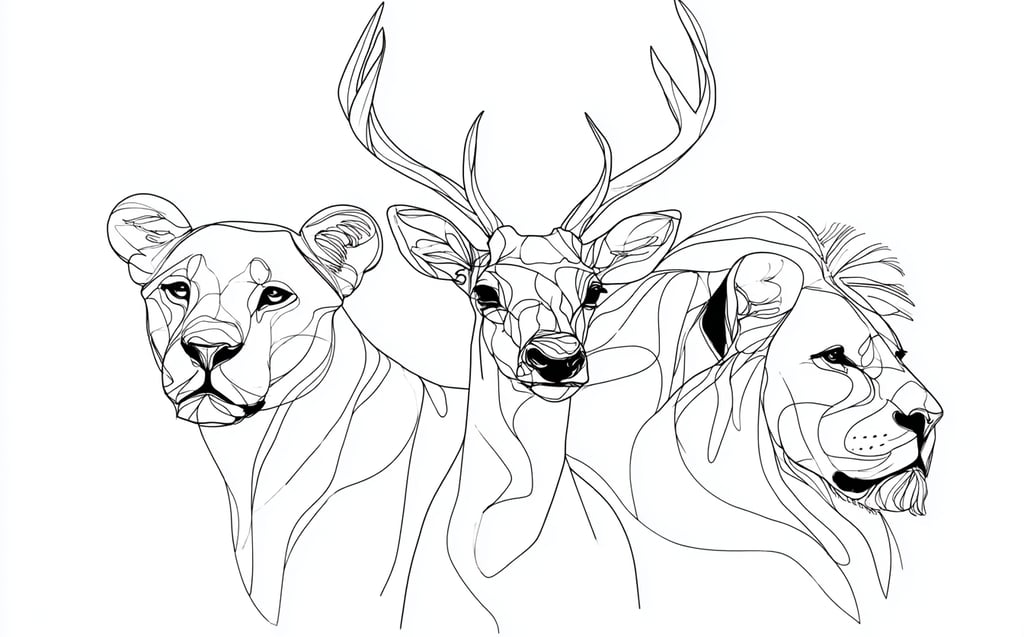
The line. No excess. No distraction. Light. Open. Deliberately placed. The line flows and disappears again.
A moment that lingers without lingering. You see the animal. You feel its movement. Nothing is heavy. Nothing is loud.
My works represent mindfulness and transience. For animals. For nature. For the present moment.