
ANIMALS IN THE ZOO
BETWEEN FASCINATION, RESPONSIBILITY AND NEW QUESTIONS
1/9/20263 min read
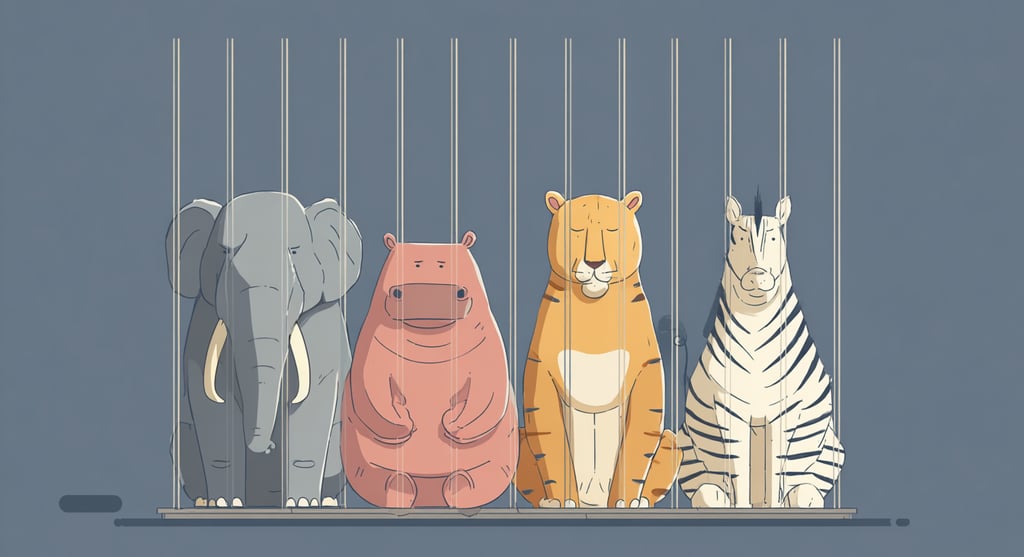
It is an almost magical moment: a tiger looks up, elephants trumpet, giraffes stroll majestically through their enclosure. Zoos attract us humans – we associate them with education, experiences and childhood memories. But behind these moments lies a deeper debate: what does it really mean to keep animals in captivity? And is what we see today species-appropriate or a relic of times past?
More than Bars and Concrete – how zoos have changed
Anyone visiting modern zoological gardens today will notice that they have changed significantly. Most facilities in the UK and elsewhere are no longer concrete cages, but rather natural habitats with structured enclosures, water areas and places of retreat. Keeping social groups together, landscape design instead of bars – these are developments that many zoos have promoted in recent decades to improve the welfare of the animals and at the same time offer visitors a whole new experience of nature.
The role of zoos has also expanded: many participate in international breeding programmes, help endangered species to survive and provide educational opportunities for visitors who might otherwise never encounter wild animals. For many people, zoos are places where curiosity about animals is combined with knowledge about ecological relationships.
The other Side – when keeping Animals becomes a Problem
But despite this progress, criticism continues unabated. The idea of animals spending their entire lives in confined spaces raises questions. Just think of reports from zoos in other parts of the world, where elephants have to live alone and without conspecifics for decades – without the social structures they know in the wild. This has led to behavioural disorders and visible suffering in some animals.
Such examples show that not every improvement is synonymous with true species-appropriate care. They raise fundamental questions: Is more space and a natural substrate enough to meet the complex needs of highly developed animals? What does psychological well-being mean for animals with complex social structures or vast natural habitats? Can we ever really make captivity ‘good’?
Education, Species Conservation and Ethics – a difficult balancing Act
A frequently cited argument in favour of zoos is their contribution to species conservation. Conservation breeding programmes have saved some species from complete extinction – an aspect that many proponents see as a key achievement of modern zoos.
However, critics counter that most zoo animals are not endangered and that species conservation efforts tend to focus on a few select species, while millions of animals spend their lives in captivity. And then there are those who argue that gentle sanctuaries outside zoos would be a better solution – places where animals can live as close to nature as possible without being put on display.
For whom are Zoos still relevant today?
The question of whether zoos are still relevant today cannot be easily answered with a simple ‘yes’ or ‘no’. For many people, zoos continue to be places of wonder, education and commitment to nature and biodiversity. At the same time, there is a growing awareness that animals need more than just sufficient space – namely the opportunity for species-appropriate social contact, mental stimulation and natural behavioural space.
Perhaps the future lies somewhere between the extremes: developing zoos into places that are even more focused on the well-being and needs of the animals – while at the same time being more transparent and critical in their dialogue with the public and the scientific community. This is an ongoing process in which we as a society must ask ourselves: What do we consider acceptable? What do we want to improve? And what does real progress look like?
Conclusion: A Reflection of our Values
Animals in zoos are more than just attractions. They are both a reminder and an opportunity – a reflection of our relationship with nature, our knowledge and our responsibility. The progress made in recent decades shows that zoos can change. But the question remains whether this is enough. It is precisely the open, curious questioning and honest exchange about what animals need that makes this debate so important.
National Geographic: Die einsamsten Elefanten der Welt
→ https://www.nationalgeographic.de/tiere/2017/11/die-einsamsten-elefanten-der-weltNational Geographic: Artgerecht oder altmodisch – wie zeitgemäß sind Zoos?
→ https://www.nationalgeographic.de/zoos/2022/04/artgerecht-oder-altmodisch-wie-zeitgemaess-sind-zoosBritannica ProCon: Zoos – Pro und Contra (englisch)
→ https://www.britannica.com/procon/zoos-debateSuchDichGrün: Tierschutz oder Show? Was Zoos leisten (deutsch)
→ https://suchdichgruen.de/wissen-und-technologie/tiere-tierschutz-oder-show